
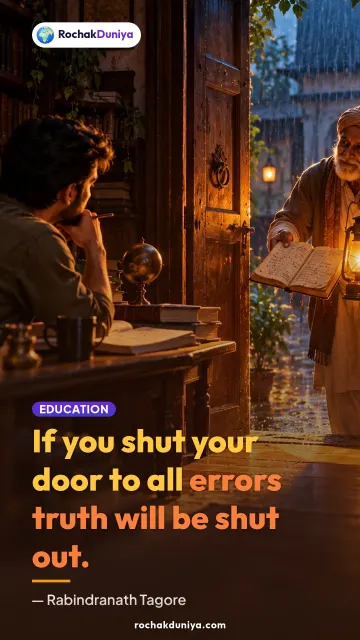
 If you shut your door to all errors truth will be shut out.
Download image
More ways to share
What it means
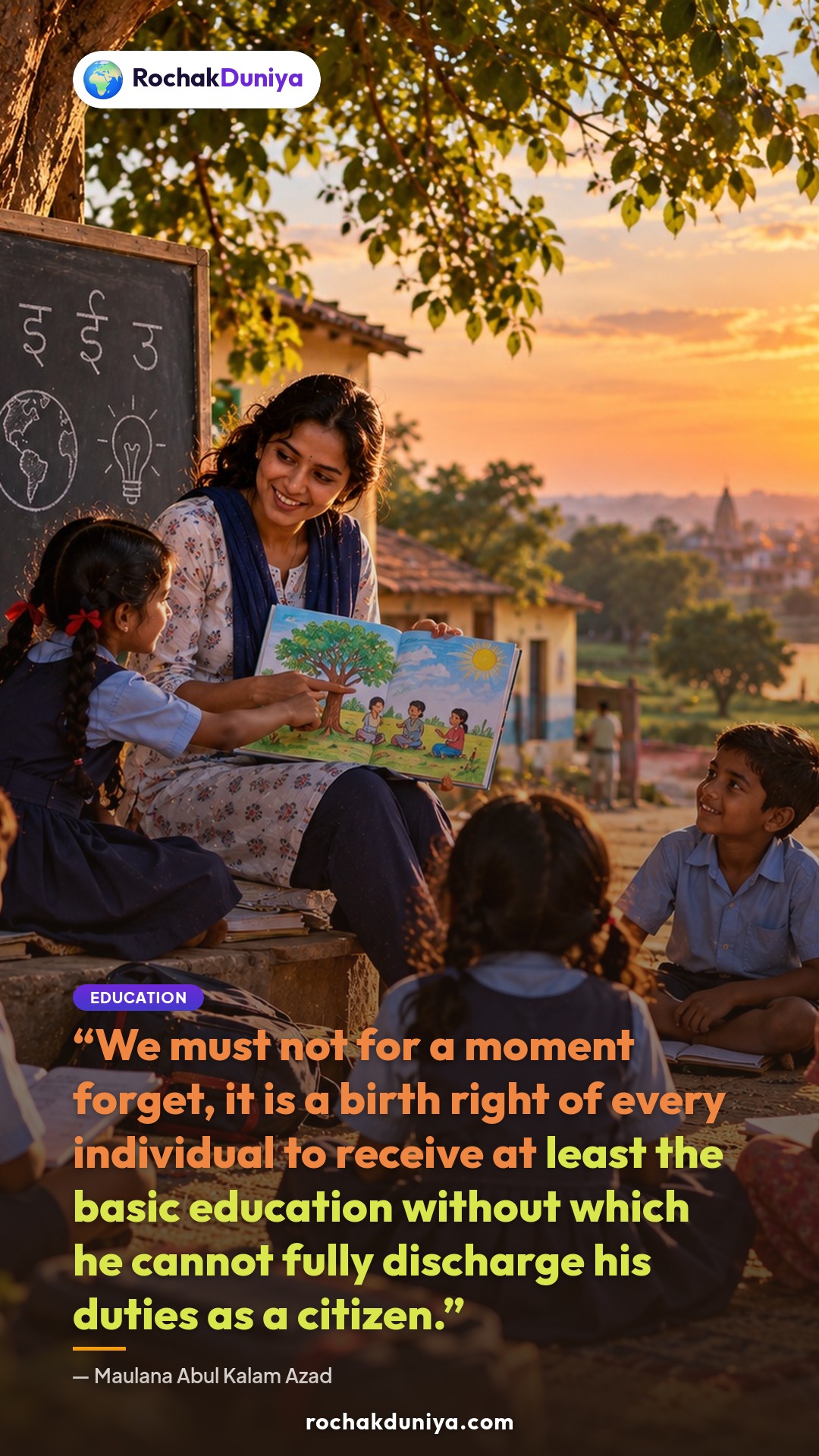
Education is not a privilege reserved for people who can afford school or college. It is a basic right that helps every person understand the world, make informed decisions and fulfil their responsibilities as a citizen. Reading, writing and learning to think clearly give people the tools to participate in society with confidence.
The deeper idea is that education benefits both the individual and the country. A student who learns to question, understand different viewpoints and distinguish facts from rumours becomes better prepared for responsible citizenship. For example, a child who learns to read can understand a bank form, follow a government notice or recognise misleading information. These everyday abilities show why basic education should be accessible to everyone, regardless of family income or background.
The message behind Maulana Abul Kalam Azad's views on education is that learning must open doors for all, not just a fortunate few. A fair society must give every child the opportunity to build knowledge and become an independent, responsible citizen.
The context: Maulana Abul Kalam Azad, India's first Education Minister (1947–1958), said this at the All India Education Conference on 16 January 1948. The idea of free basic education for every child went into the Constitution as Article 45; in 2002 education became a fundamental right under Article 21A, and the Right to Education Act, 2009 made it free and compulsory for children aged 6 to 14. His birthday, 11 November, is celebrated as National Education Day.
Meaning in Hindi · हिंदी में अर्थ
शिक्षा केवल उन लोगों की सुविधा नहीं है जो स्कूल या कॉलेज का खर्च उठा सकते हैं। यह हर व्यक्ति का बुनियादी अधिकार है। पढ़ना, लिखना और सही ढंग से सोचना सीखकर व्यक्ति दुनिया को बेहतर समझ सकता है, अपने फैसले खुद ले सकता है और नागरिक के रूप में अपनी जिम्मेदारियाँ निभा सकता है।
इस विचार का गहरा अर्थ यह है कि शिक्षा से व्यक्ति के साथ-साथ पूरे देश को लाभ मिलता है। जो विद्यार्थी सवाल पूछना, अलग-अलग विचारों को समझना और अफवाहों तथा तथ्यों में अंतर करना सीखता है, वह जिम्मेदार नागरिक बनने की दिशा में आगे बढ़ता है। उदाहरण के लिए, पढ़ना जानने वाला बच्चा बैंक का फॉर्म समझ सकता है, सरकारी सूचना पढ़ सकता है और भ्रामक जानकारी पहचान सकता है। ये रोजमर्रा के कौशल बताते हैं कि बुनियादी शिक्षा हर बच्चे तक पहुँचना क्यों जरूरी है।
मौलाना अबुल कलाम आज़ाद के शिक्षा पर विचार यही संदेश देते हैं कि सीखने के अवसर केवल कुछ लोगों तक सीमित नहीं रहने चाहिए। एक न्यायपूर्ण समाज वह है जो हर बच्चे को ज्ञान हासिल करने, आत्मनिर्भर बनने और जिम्मेदार नागरिक के रूप में विकसित होने का अवसर दे।
संदर्भ: भारत के पहले शिक्षा मंत्री (1947–1958) मौलाना अबुल कलाम आज़ाद ने यह बात 16 जनवरी 1948 को अखिल भारतीय शिक्षा सम्मेलन में कही थी। हर बच्चे को मुफ़्त बुनियादी शिक्षा देने का विचार संविधान के अनुच्छेद 45 में आया; 2002 में अनुच्छेद 21A के तहत शिक्षा मौलिक अधिकार बनी, और शिक्षा का अधिकार अधिनियम, 2009 ने 6 से 14 साल के बच्चों के लिए इसे मुफ़्त और अनिवार्य कर दिया। उनका जन्मदिन, 11 नवंबर, राष्ट्रीय शिक्षा दिवस के रूप में मनाया जाता है।
Source
All India Education Conference, 16 January 1948 (अखिल भारतीय शिक्षा सम्मेलन, 16 जनवरी 1948)
Report an error
More education quotes
All education quotes
If you shut your door to all errors truth will be shut out.

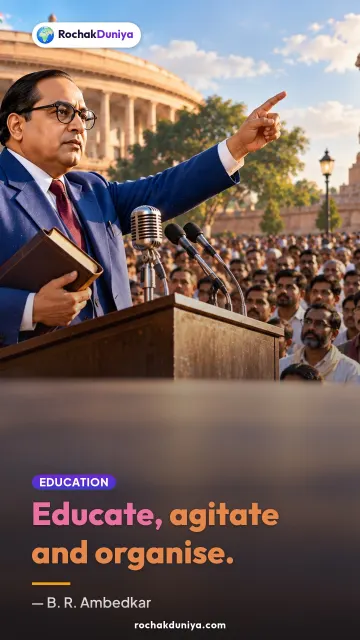 Educate, agitate and organise.
 Education is the manifestation of the perfection already in man.
 Strength is life, weakness is death.
 Educate, agitate, organise.